If the business cannot secure the opening, keep customers and staff away from unsafe hardware and describe the exact failure: the key, latch, bolt, closer, or door position. Photograph the full door and hardware, identify the authorized business contact, and ask the provider for a temporary-security plan plus a cause-based repair quote.
Quick checklist
- Identify whether the door is aluminum storefront, wood, hollow metal, glass, or a gate.
- Describe whether the key turns, latch catches, bolt extends, and door closes on its own.
- Photograph the full opening, door edge, strike, closer, pivots or hinges, and lock face.
- Prepare the authorized contact, business hours, loading or parking access, and alarm coordination.
- Ask what can be made secure now and what permanent parts or follow-up may be needed.
What the storefront symptom can change
Describe the complete opening
Commercial doors work as systems. A functional cylinder cannot secure a door when the latch misses, the closer does not bring the leaf to the frame, or a pivot has allowed the door to drop.
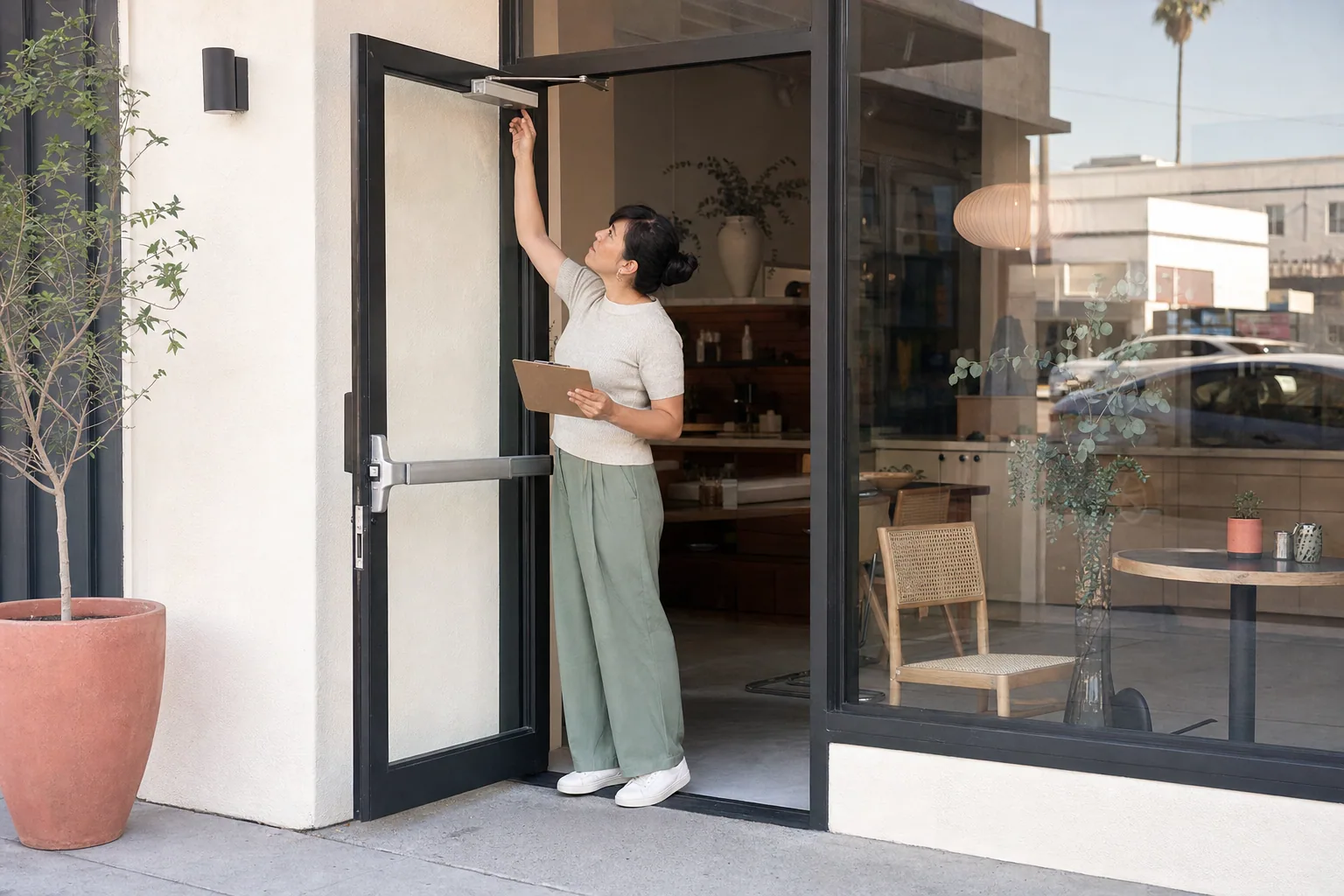
Include the full-height door in photos, then add close views of the lock, edge, strike, closer, top and bottom pivots or hinges, and any visible rub marks. Do not post access codes or restricted key details.
Separate immediate security from permanent repair
When the opening cannot be secured, the first question is what safe temporary measure is possible and who can authorize it. A permanent component may not be identifiable or available until the opening is inspected.
Ask whether the first visit includes only diagnosis and temporary security or a likely permanent repair. Confirm any return visit, ordered part, and responsibility for maintaining the temporary condition.
Commercial authorization and access matter
The person requesting work should be able to show authority for the business or property. Leased storefronts may also involve a landlord, property manager, facilities contact, security desk, or required access window.
Share operating hours, alarm procedures, loading access, parking restrictions, and whether the work affects a shared or required exit. The provider is responsible for identifying coordination outside its scope.
Compare a documented scope
A useful commercial quote identifies the opening, symptom, labor assumption, proposed components, keys, adjustments, testing, and any condition that could change the total.
Ask the provider to test closing, latching, locking, unlocking, and authorized egress after the work. Keep the company name, LCO, invoice, supplied key count, and warranty contact with the property record.
Questions people ask
Is a storefront lock problem always caused by the cylinder?
No. The latch, strike, closer, pivots, hinges, frame, threshold, or door position can prevent a functioning lock from securing the opening.
Can a business request temporary security first?
Ask the provider what safe temporary measure is possible for the specific opening and who must authorize it. Confirm what permanent follow-up, parts, and return visit would still be required.
Sources and further checks
View 3 checked sources
Sources checked August 10, 2026. Product instructions vary by model; use documentation for the exact hardware or vehicle.