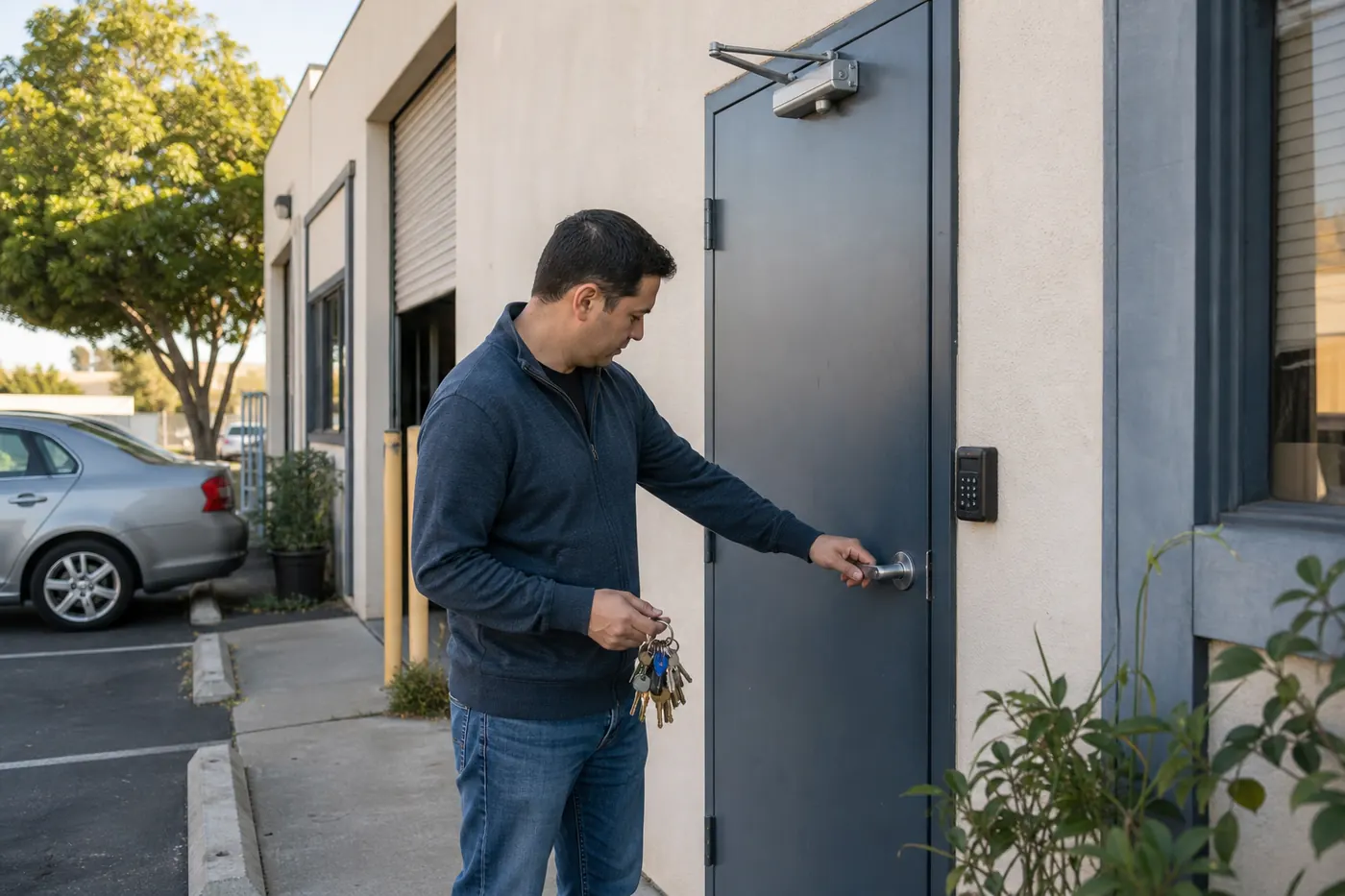
A standalone keypad may fit one or a few simple openings when local codes and basic user changes are enough. Managed access control becomes more relevant when the business needs multiple doors, individual credentials, schedules, rapid offboarding, event records, centralized administration, or planned expansion.
Quick checklist
- List every opening and identify the existing lock, door, frame, closer, and egress hardware.
- Count current users and estimate turnover, temporary access, schedules, and visitor needs.
- Decide whether individual credentials and access-event records are necessary.
- Name the person responsible for adding users, removing access, and retaining documentation.
- Define mechanical override, power loss, network loss, battery failure, and emergency egress expectations.
Match the system level to the operating need
Begin with users and operations
List employees, managers, vendors, cleaners, temporary staff, and visitors who need access. Define which doors they use, when access should work, and how quickly it must be removed after a role changes.
A shared code is simple but difficult to attribute and easy to retain after turnover. Individual credentials require more infrastructure but can support faster changes and clearer administration.
The door must work mechanically first
Electronic hardware cannot compensate for a door that drags, fails to close, or leaves the latch outside the strike. Existing lock type, door material, frame, handing, closer, egress hardware, and property restrictions affect compatibility.
Ask for an opening-by-opening assessment. The proposal should distinguish locksmith hardware, door correction, electrical or low-voltage work, software, and any other coordination.
Plan for failure and ownership
Decide what should happen during power, battery, internet, server, or phone failure. Confirm mechanical override, emergency egress, administrator recovery, and where credentials and configuration records are stored.
The business should own its administrator accounts, user records, programming information, and handoff documentation. Avoid a system that becomes unmanageable when one employee or vendor is unavailable.
Compare the complete lifecycle
Compare hardware, installation, credentials, wiring, subscriptions, software, training, documentation, support, future doors, and replacement parts—not only the first device price.
Ask who handles user administration, warranty issues, updates, and service after installation. The provider should define its licensed scope and identify work that requires other qualified parties.
Questions people ask
Is a keypad lock the same as access control?
No. A standalone keypad commonly manages one opening locally. Managed access control can coordinate individual credentials, schedules, multiple doors, event records, and centralized administration.
Should a business choose the device before inspecting the door?
No. Existing hardware, alignment, frame, handing, closer, egress needs, power, and property rules can determine which products and coordination are practical.
Sources and further checks
View 3 checked sources
Sources checked August 10, 2026. Product instructions vary by model; use documentation for the exact hardware or vehicle.