A smart lock fits only when its supported door thickness, bore, backset, handing, trim clearance, and lock type match the opening. The bolt should move freely with the door closed before installation. Check the exact model instructions rather than relying on a generic “standard door” claim.
Quick checklist
- Identify whether the existing lock is cylindrical, mortise, rim, or narrow-stile hardware.
- Measure door thickness and backset using the manufacturer’s instructions.
- Confirm that the deadbolt moves freely with the door closed.
- Check trim clearance, handing, weather exposure, and available Wi-Fi or hub coverage.
- Keep a plan for battery failure, phone loss, and emergency mechanical entry.
Compatibility checks before buying
Identify the opening before the product
Most consumer retrofit smart deadbolts are designed for a common residential bored-door preparation. Older Los Angeles homes may have mortise locks, unusual backsets, decorative trim, or previous modifications. Storefront aluminum doors usually use an entirely different hardware category.
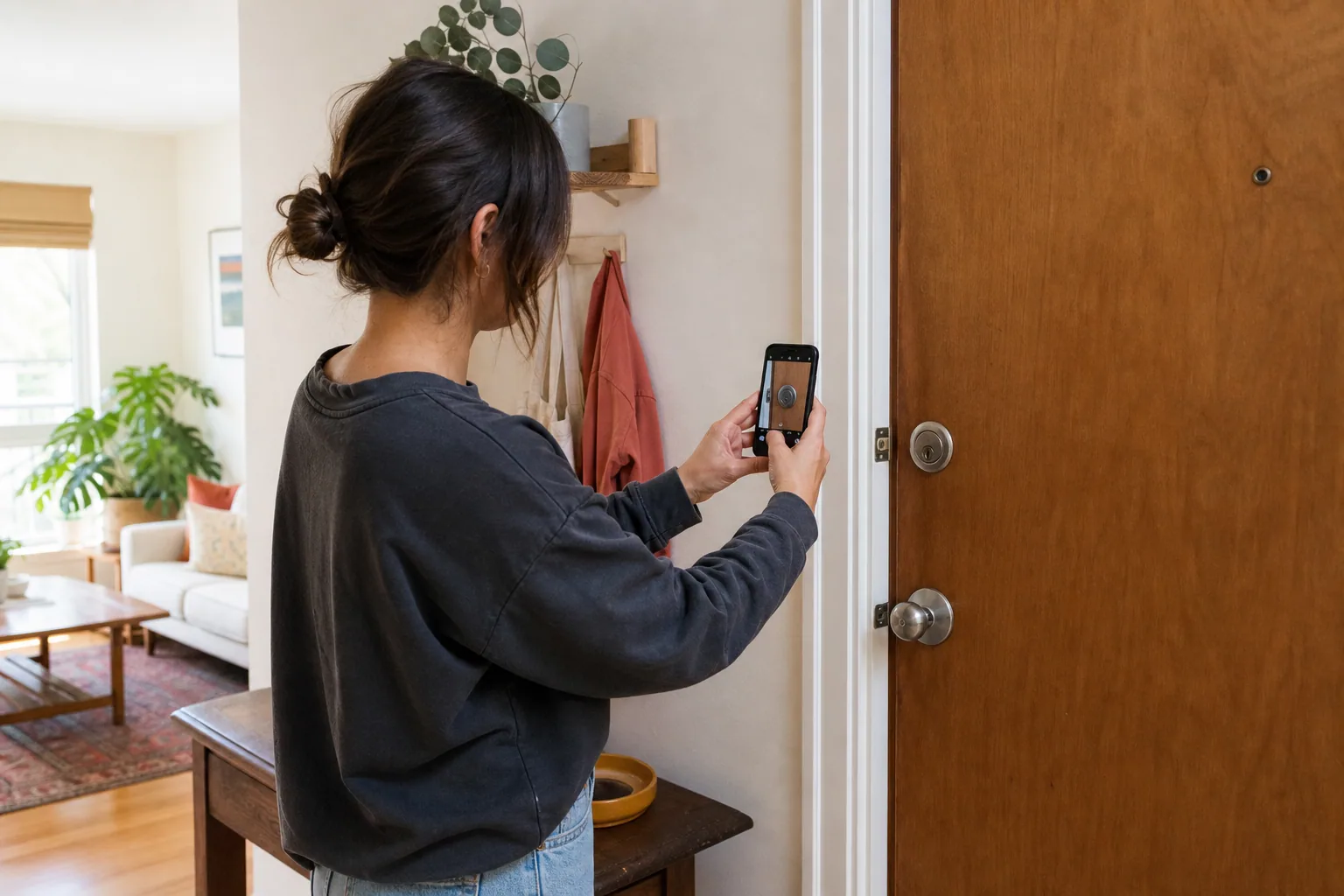
Photograph both faces of the door, the edge, the existing latch or bolt, and the strike. Include a tape measure only when it can be positioned safely and clearly.
Alignment determines reliability
A motor should not have to pull a binding bolt into the strike. Test whether the current deadbolt extends smoothly with the door open and closed. If it works open but not closed, the underlying issue is often alignment rather than electronics.
Door movement, loose hinges, weather seals, and seasonal changes can all affect the fit. Correcting the opening first improves battery life and reduces failed locking events.
Choose access rules before features
Think about who needs access, how often codes change, whether temporary users need schedules, and who will administer the app. A rental, family home, office, and shared gate have different failure and handoff risks.
Confirm what still works without internet service and how the door can be opened if batteries die. Store backup keys and override instructions securely—not beside the door.
Confirm installation scope
Ask whether the quote covers only mounting the device or also door alignment, strike modification, app setup, code testing, and removal of old hardware. Confirm who handles manufacturer warranty issues after installation.
The independent provider should identify its company and LCO after connection, inspect the door, explain compatibility, and quote before changing the opening.
Questions people ask
Can a smart lock be installed on a mortise lock?
Some specialized products support mortise applications, but a standard retrofit deadbolt usually does not. The exact mortise case, trim, door preparation, and intended function must be checked.
Why does a smart lock work when the door is open but fail when closed?
The bolt may be rubbing or missing the strike because of alignment, hinge movement, or door pressure. Correcting the fit is usually more useful than forcing the motor.
Sources and further checks
View 3 checked sources
Sources checked August 10, 2026. Product instructions vary by model; use documentation for the exact hardware or vehicle.