Do not force the key or thumbturn. Compare normal operation with the door open and closed, then look for fresh marks around the strike and visible door movement. A provider should identify whether the correction belongs at the strike, hinges, door, frame, or lock before recommending replacement.
Quick checklist
- Test only normal key and thumbturn operation with the door open and closed.
- Note whether lifting, pushing, or pulling the door changes the resistance.
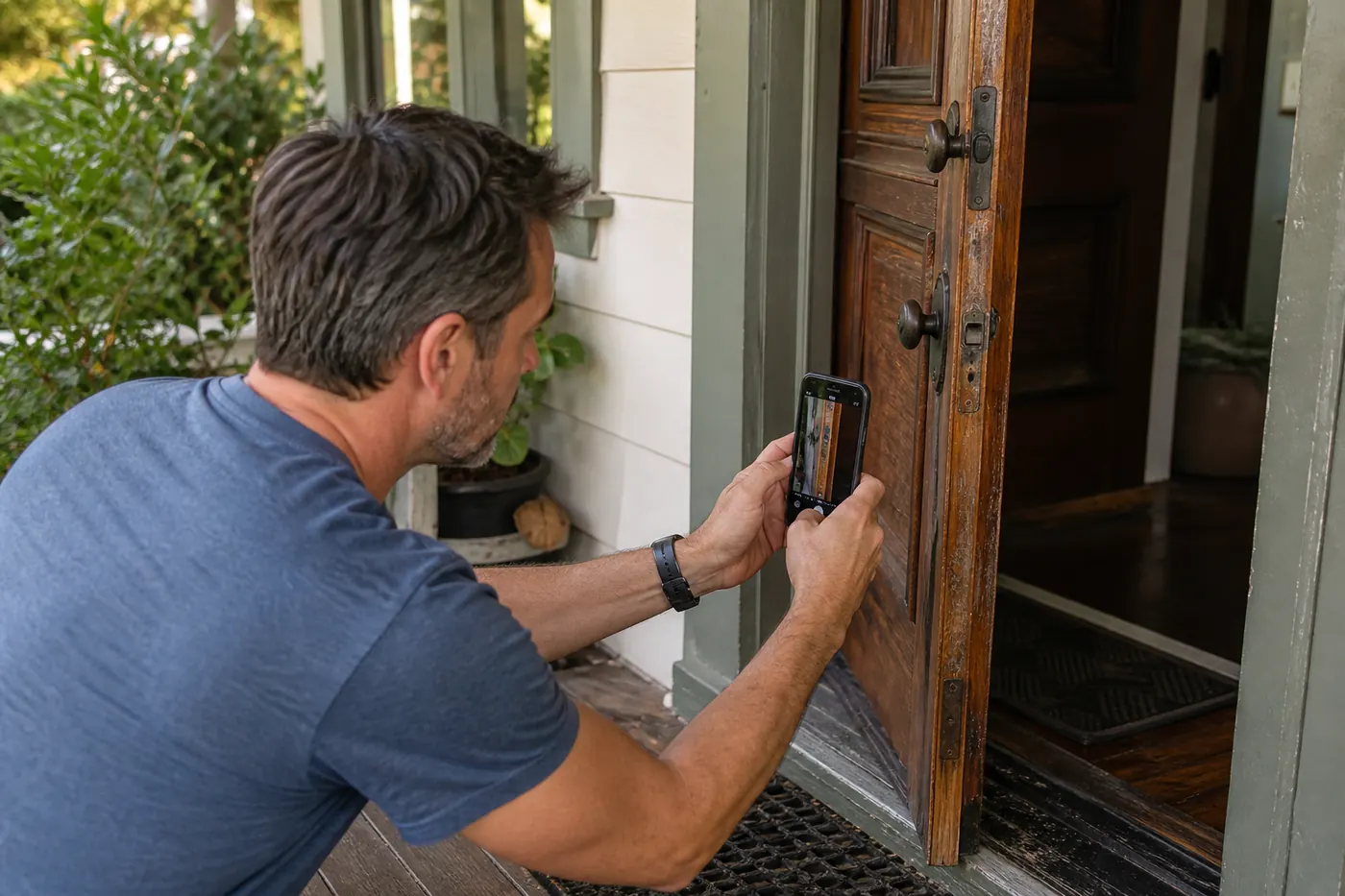
- Photograph the bolt, door edge, strike, hinge gaps, and any fresh rub marks.
- Mention recent weather, painting, new seals, hinge work, or impact to the door.
- Ask the provider to separate alignment work, lock repair, and replacement in the quote.
What the symptom can point toward
Why open-door and closed-door tests differ
With the door open, the bolt moves without entering the strike. Closing the door introduces hinge position, frame geometry, weather seals, latch pressure, and the exact strike opening. A small shift can make a healthy bolt feel like a failed lock.
Use only ordinary operating pressure. Repeatedly forcing the key can bend it, damage the cylinder, or turn a straightforward alignment correction into a larger repair.
Marks and movement provide useful clues
Fresh metal marks above, below, or beside the strike opening can show where the bolt is contacting. Uneven gaps around the door, loose hinge screws, a door that must be lifted, or new weather seals can add context for the provider.
A photo should show the complete door edge and frame as well as the close-up. The goal is not remote diagnosis; it is giving enough context for the provider to bring a realistic plan.
Adjustment, repair, and replacement are different scopes
Strike adjustment may help when the opening is otherwise stable. Loose hinges, damaged wood, a moving frame, or a door that no longer closes correctly can require broader correction. Replacing only the deadbolt does not guarantee that a misaligned opening will work.
If the lock is also loose, rough, corroded, or damaged when the door is open, the final scope may combine opening adjustment with lock repair or replacement.
Ask for a cause-based quote
Describe the symptom instead of requesting a new lock in advance. Ask what the provider intends to inspect, what adjustment is included, and what would justify additional parts.
If the proposed scope changes after inspection, obtain the revised total before added work begins. The provider should test the final result with the door both open and closed.
Questions people ask
Does a binding deadbolt always need replacement?
No. If it operates normally with the door open, the cause may be strike alignment, hinge movement, door pressure, or the frame. The complete opening should be checked before choosing replacement.
Should I file the bolt or enlarge the strike myself?
Removing material without identifying the cause can weaken the fit or hide continued door movement. Document the contact point and ask the provider to explain the proposed correction.
Sources and further checks
View 3 checked sources
Sources checked August 10, 2026. Product instructions vary by model; use documentation for the exact hardware or vehicle.